
Benefits of Electrodynamic Shakers for Reliability Testing
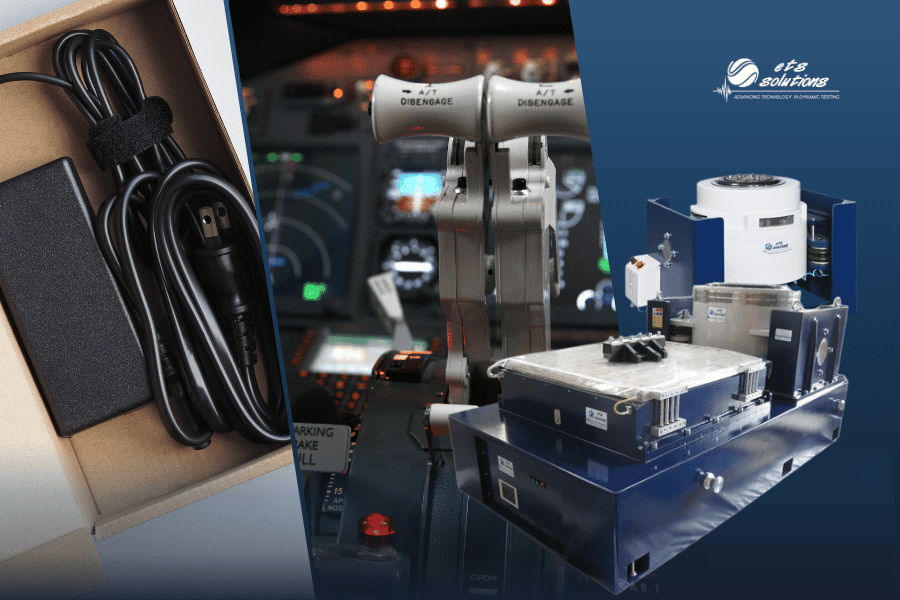
Short answer: why use electrodynamic shakers for reliability testing?
Electrodynamic shakers are used in reliability testing because they create precise, repeatable vibration profiles across a wide frequency range.
They are especially useful for sine, random, shock pulse, durability, qualification, and ESS testing on automotive components, aerospace assemblies, electronics, EV battery parts, industrial products, and transportation systems.
The main benefit is control. Engineers can reproduce real vibration conditions, measure product response, identify weaknesses, and improve reliability before products reach the field.
What is an electrodynamic shaker?
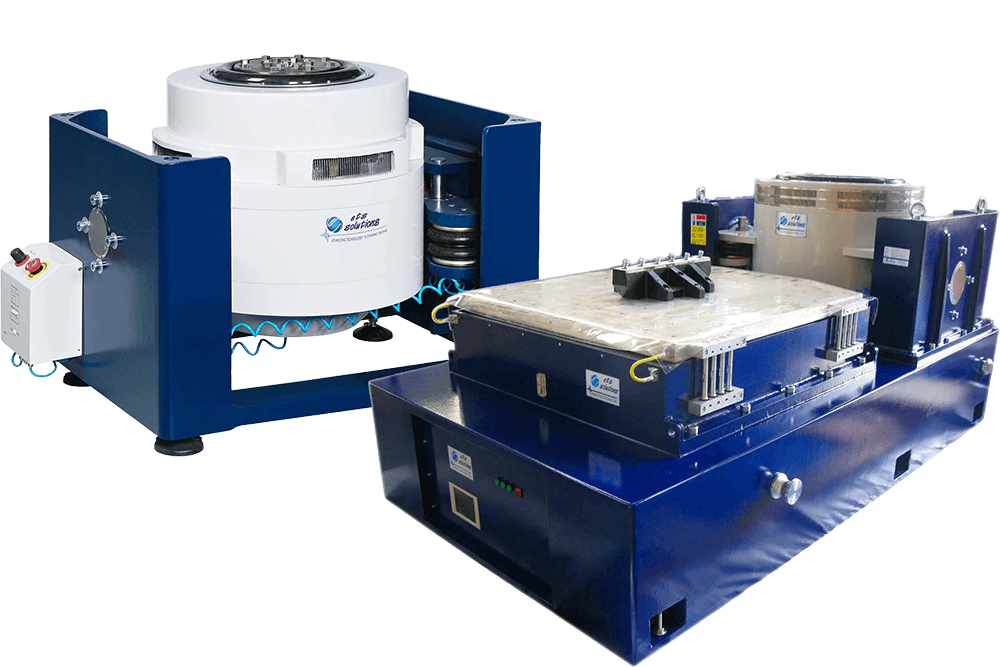
An electrodynamic shaker is a vibration testing machine that uses electromagnetic force to move an armature and create controlled vibration.
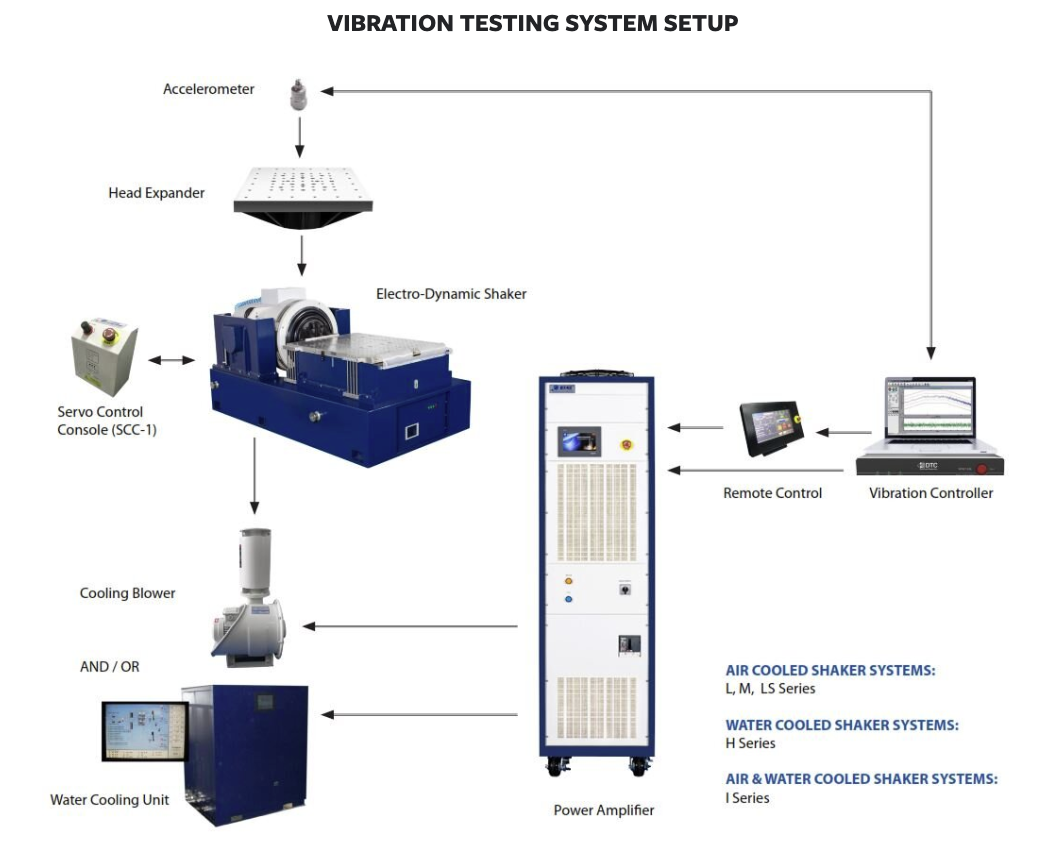
In a complete vibration testing system, the shaker normally works together with:
a power amplifier
a vibration controller
sensors or accelerometers
fixtures or head expanders
slip tables for horizontal testing
options and accessories
environmental chamber integration when required
The shaker creates the vibration, but the complete system determines how accurate, repeatable, and useful the test results are.
For ETS shaker options, see: Shaker Model Overview
Why reliability testing needs controlled vibration
Reliability testing is about finding problems before the product fails in real use.
Products can be exposed to vibration during:
road transport
vehicle operation
aircraft operation
shipping and packaging
industrial machinery operation
launch or transport handling
long-term field use
thermal and mechanical stress combined
Without vibration testing, weak points may only appear after the product is already installed, shipped, or used by the customer.
Common failures found during vibration testing include:
loose connectors
cracked solder joints
damaged brackets
housing fatigue
cable movement
sensor instability
fixture-related resonance
fastener loosening
component fatigue
unexpected noise or signal issues
Electrodynamic shakers help engineers reproduce controlled vibration conditions so they can test these risks in the lab.
Key benefits of electrodynamic shakers for reliability testing
1. Precise control of vibration profiles
One of the main benefits of electrodynamic shakers is precise control.
Engineers can run controlled profiles such as:
sine sweep
random vibration
resonance search
dwell testing
shock pulses
durability profiles
ESS screening
customer-defined vibration profiles
This matters because reliability testing needs repeatable data.
If the vibration input changes from one test to another, it becomes difficult to compare results, validate design changes, or prove compliance.
Electrodynamic shakers allow engineers to control key test parameters such as:
frequency
acceleration
displacement
velocity
force
duration
test direction
profile shape
This makes them suitable for product validation where accuracy and repeatability are required.
2. Wide frequency range for different applications
Different products fail at different frequencies.
A small electronic assembly may be sensitive to higher-frequency vibration. A larger mechanical component may be more affected by lower-frequency displacement or structural resonance.
Electrodynamic shakers are useful because they can cover a broad frequency range depending on the shaker model and system configuration.
This makes them suitable for:
automotive electronics
aerospace components
consumer electronics
sensors and connectors
battery modules
industrial controls
packaging and transportation simulation
research and development labs
For engineers, this flexibility is important because one lab may need to test many different products over time.
3. Repeatable results for engineering comparison
Reliability testing is not only about passing or failing a product.
It is also about comparison.
Engineers may need to compare:
old design vs new design
different fixture designs
different mounting methods
supplier A vs supplier B
material change impact
production sample consistency
pre-test vs post-test condition
Electrodynamic shakers help create repeatable vibration inputs, making it easier to understand whether a change improved the product or introduced a new weakness.
This is especially useful during product development, root cause analysis, and qualification testing.
4. Suitable for sine, random, and shock pulse testing
Electrodynamic shakers are commonly used for several types of vibration tests.
Sine testing
Sine testing applies one frequency at a time. It is useful for resonance search, troubleshooting, and understanding how a product responds across a frequency range.
Random vibration testing
Random vibration applies energy across many frequencies at once. It is commonly used to simulate real-world vibration such as road, transport, aircraft, or operational environments.
Shock pulse testing
Some electrodynamic shaker systems can run controlled shock pulse profiles within the system’s force, displacement, velocity, and payload limits. This is useful when a product needs to experience short-duration transient events as part of the test plan.
For more detail, see:
Difference Between Sine, Random & Shock Vibration Testing
5. Good fit for product qualification and standards-based testing
Many industries require vibration testing as part of product qualification.
Depending on the product and market, test programs may reference standards such as:
MIL-STD-810 for defense and rugged equipment environmental testing
DO-160 for airborne equipment environmental conditions
ISO 16750 for road vehicle electrical and electronic equipment
ISTA for packaging and transport testing
ASTM or IEC standards depending on the application
The exact standard, method, severity, and profile depend on the product, mounting location, customer requirement, and industry.
Electrodynamic shaker systems are often selected because they provide the control and repeatability needed for standards-based vibration tests.
Important note: engineers should always follow the latest standard version and the specific customer test requirement. The shaker system must be selected based on the actual profile, payload, fixture, direction, and environmental conditions.
For related ETS content, see:
Why Certification Standards Matter in Vibration Testing
6. Flexible system configurations
An electrodynamic shaker does not work alone.
The system can be configured depending on the application.
A complete setup may include:
shaker
power amplifier
vibration controller
vertical armature
slip table
head expander
custom fixture
sensors
cables
chamber interface
thermal barrier
remote control or safety accessories
This flexibility is one of the biggest advantages for reliability testing labs.
A lab may start with one type of product and later need to test larger assemblies, horizontal directions, combined environmental conditions, or different standards.
A well-configured electrodynamic shaker system can support changing test requirements over time.
For system components, see:
7. Compatible with horizontal and multi-axis testing setups
Many products do not experience vibration in only one direction.
Automotive components, battery modules, aircraft equipment, and industrial assemblies may need to be tested vertically and horizontally.
A slip table allows engineers to run controlled horizontal vibration tests. This is important when the real mounting direction or load direction matters.
Electrodynamic shaker systems can be paired with slip tables, guided head expanders, and fixtures to support more realistic test configurations.
This helps engineers test:
vehicle-mounted components
battery modules
electronics
brackets
sensors
connectors
larger assemblies
products with a high center of gravity
Horizontal testing requires careful attention to alignment, payload, table size, fixture stiffness, and cable routing.
For more detail, see:
Slip Tables & Multi-Axis Testing: Tips & Tricks
8. Can support combined environmental + vibration testing
In real life, products often experience vibration together with heat, cold, humidity, or altitude-related conditions.
For example:
automotive electronics may see road vibration and temperature cycling
EV battery modules may experience vibration, heat, and cold
aerospace equipment may see vibration and low-temperature conditions
industrial electronics may face vibration and humidity
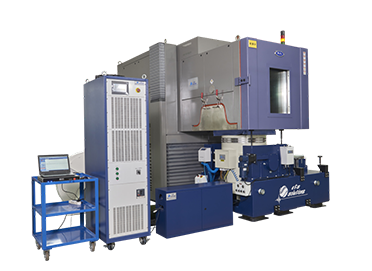
Electrodynamic shaker systems can be integrated with environmental chambers when the application requires combined testing.
This can help reveal failures that separate vibration-only or temperature-only tests may miss.
Combined testing requires careful system planning. Engineers must consider:
chamber opening
thermal barrier
fixture material
cable feedthroughs
sensor suitability
airflow
condensation risk
slip table integration
control stability at temperature
For related guidance, see:
Combined Environmental + Vibration Testing
Electrodynamic shaker vs other vibration test systems
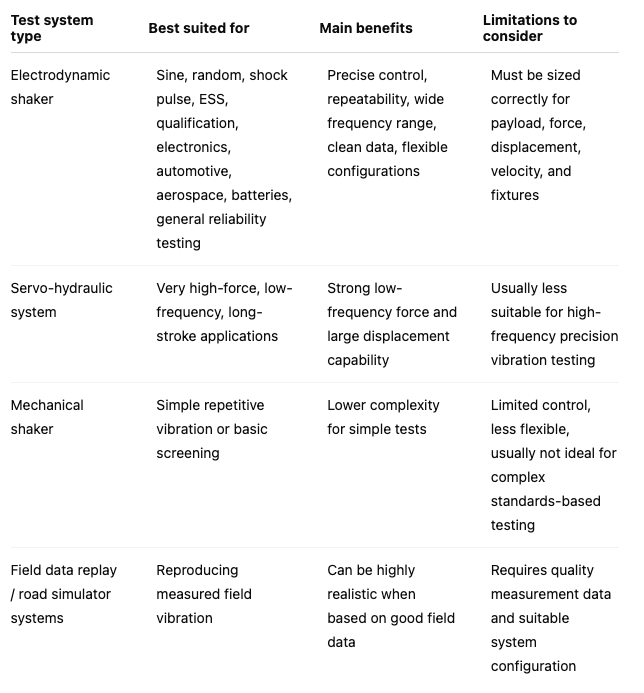
The right choice depends on the test goal.
For many reliability testing programs, electrodynamic shakers are chosen because they offer a strong balance of control, frequency range, repeatability, and flexibility.
When should you use an electrodynamic shaker?
Use an electrodynamic shaker when you need:
accurate and repeatable vibration input
sine, random, or shock pulse profiles
product qualification testing
durability testing
ESS screening
electronics reliability testing
automotive component validation
aerospace or defense component testing
battery module vibration testing
controlled lab testing with measurable data
compatibility with slip tables, fixtures, and chambers
a system that can support multiple applications over time
An electrodynamic shaker is usually a good fit when the test requires controlled vibration, reliable measurement, and repeatable engineering results.
When might another system be better?
An electrodynamic shaker may not be the best choice for every test.
Another system may be more suitable when:
the application requires very large low-frequency displacement
the payload is extremely heavy
the test requires a specific hydraulic motion platform
the goal is simple repetitive vibration with low control requirements
the profile cannot be achieved within the shaker’s force, velocity, displacement, or payload limits
This is why system selection should always begin with the test profile and payload, not only the product category.
For selection guidance, see:
Finding the Right Shaker for Your Test Application
Real application examples
Automotive reliability testing
Automotive components are exposed to vibration from road surfaces, engines, motors, vehicle structure, and transport.
Electrodynamic shakers can be used to test:
sensors
connectors
ECUs
battery modules
brackets
powertrain components
interior components
vehicle-mounted electronics
For automotive applications, engineers often need to consider ISO 16750, customer-specific vibration profiles, horizontal testing with slip tables, and fixture design that reflects real mounting conditions.
Aerospace and defense testing
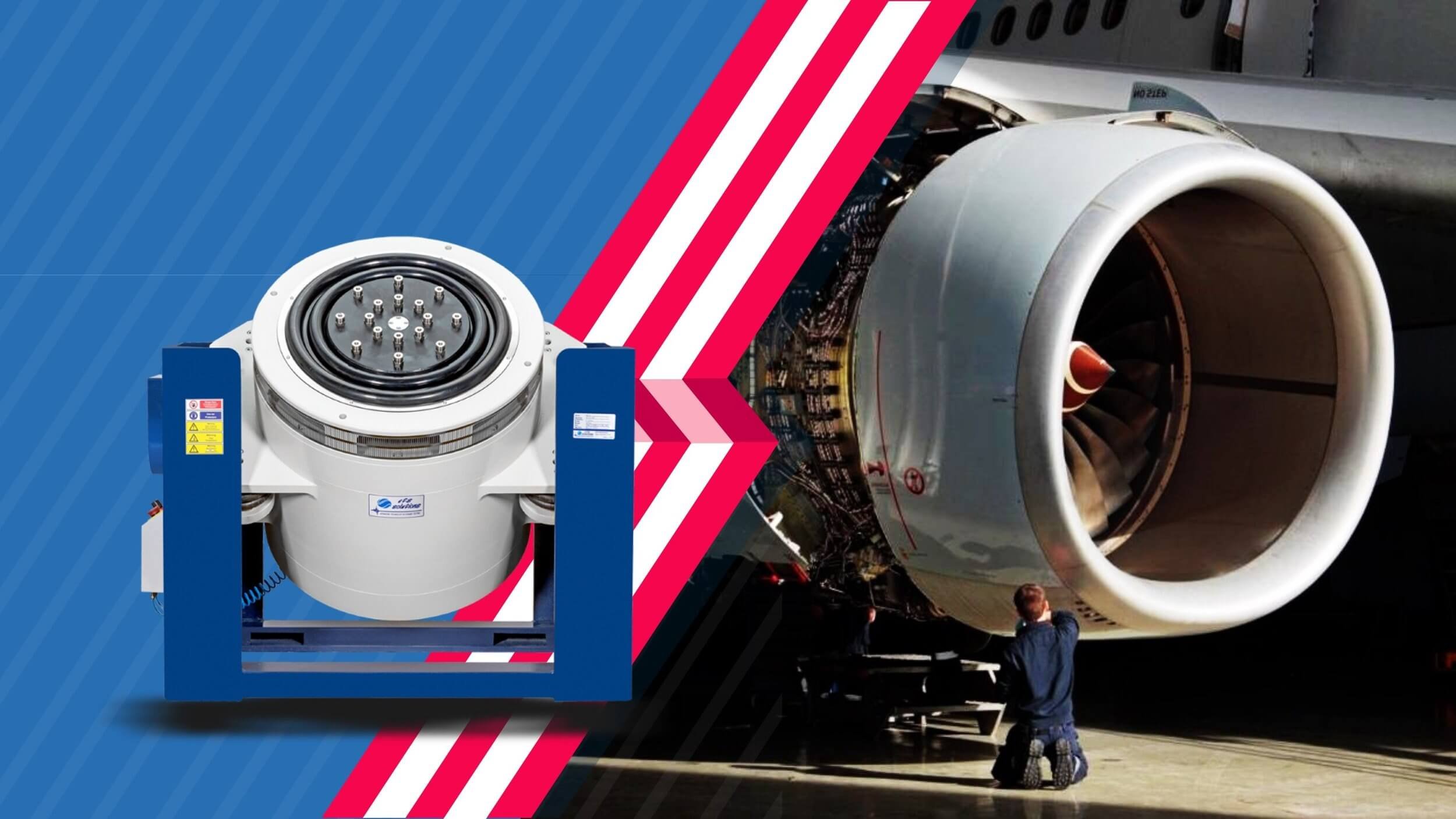
Aerospace and defense products may require vibration testing during development and qualification.
Typical examples include:
avionics
onboard electronics
communication equipment
defense electronics
satellite components
aircraft-mounted assemblies
These applications often require careful control, strong documentation, and system configurations that can support demanding test profiles.
MIL-STD-810 and DO-160 may be relevant depending on the product and program.
Electronics ESS testing
Electronic assemblies can fail due to vibration-related stress, especially when combined with manufacturing variation.
Electrodynamic shakers are often used for ESS testing to help identify defects before products are shipped.
Typical issues include:
cracked solder joints
loose components
connector problems
cable movement
weak mounting points
intermittent electrical faults
For electronics, sensor placement, fixture stiffness, and cable routing are especially important.
EV battery testing
Battery modules and related components may experience vibration during road use, transport, and operation.
Electrodynamic shaker systems can help test:
battery modules
battery electronics
mounting brackets
cooling system components
connectors and harnesses
For battery applications, combined vibration and environmental testing may also be needed when temperature affects product behavior.
Packaging and transportation simulation
Products can be damaged during transport before they ever reach the customer.
Electrodynamic shaker systems can support vibration testing for packaging and transportation conditions, often using fixtures or slip tables depending on load size and direction.
This helps manufacturers validate packaging, shipping durability, and product protection.
What to consider before buying an electrodynamic shaker system
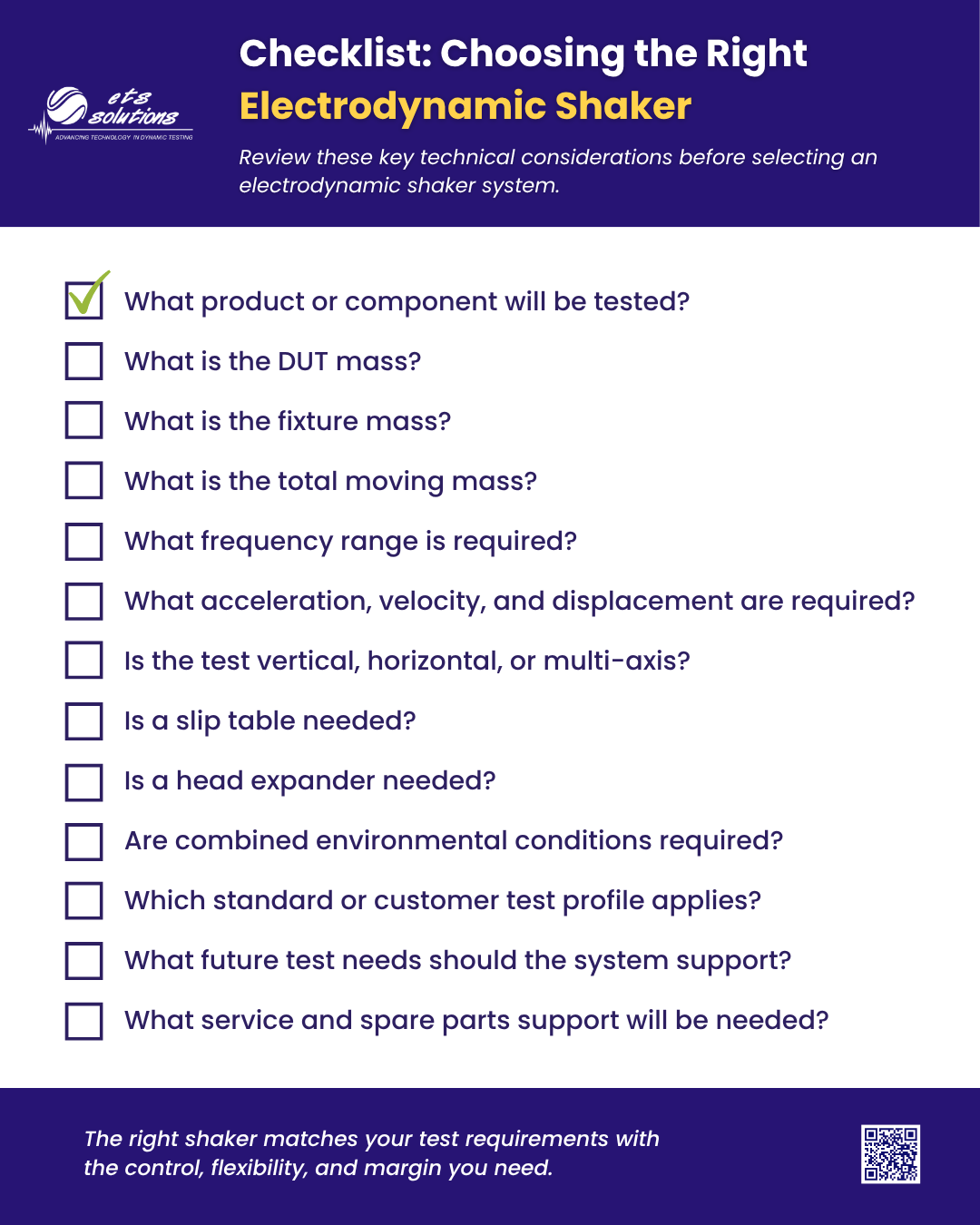
Before selecting a system, define these points:
What product or component will be tested?
What is the DUT mass?
What is the fixture mass?
What is the total moving mass?
What frequency range is required?
What acceleration, velocity, and displacement are required?
Is the test vertical, horizontal, or multi-axis?
Is a slip table needed?
Is a head expander needed?
Are combined environmental conditions required?
Which standard or customer test profile applies?
What future test needs should the system support?
What service and spare parts support will be needed?
A good system is not simply the largest shaker available. It is the system that matches the test requirement with enough margin, control, and flexibility.
How ETS supports electrodynamic shaker system selection
ETS Solutions provides vibration testing equipment and complete system components for product qualification and reliability testing.
Depending on the application, ETS can support configurations that include:
electrodynamic shakers and exciters
power amplifiers
vibration control software and hardware
slip tables
head expanders
fixtures
options and accessories
environmental chamber integration
service support
ETS helps customers review the actual test requirement, including payload, test direction, frequency range, displacement, fixture needs, and application goals.
The aim is to configure a system that is practical for the lab, suitable for the test profile, and reliable for long-term use.
For ETS capabilities, explore:

Common mistakes when selecting an electrodynamic shaker
Mistake 1: Choosing only by force rating
Force matters, but it is not enough.
The system also needs to match:
payload
fixture mass
acceleration
velocity
displacement
frequency range
duty cycle
test direction
A shaker with high force may still be the wrong choice if it cannot meet the required displacement or if the fixture adds too much moving mass.
Mistake 2: Forgetting the fixture
The fixture is part of the dynamic system.
A weak or heavy fixture can affect:
resonance
control stability
data quality
test repeatability
maximum achievable acceleration
Fixture design should be considered early in the system selection process.
For more guidance, see:
Common Vibration Test Issues and How to Solve Them
Mistake 3: Ignoring horizontal testing
Many products need horizontal testing.
If the product is mounted horizontally in real use or sees vibration in road or transport directions, a slip table may be needed.
Choosing a vertical-only setup may limit future test capability.
Mistake 4: Underestimating environmental conditions
Some failures only appear when vibration is combined with temperature, humidity, or other environmental stress.
If combined testing may be needed in the future, it should be considered during system planning.
Mistake 5: Not planning for future test needs
A shaker system is a long-term investment.
Even if the lab only tests one product today, future requirements may include:
larger payloads
different axes
combined chamber testing
additional standards
more sample types
upgraded controllers or amplifiers
A system should be selected with both current and future requirements in mind.
FAQ
-
Electrodynamic shakers provide precise control, repeatable test results, a wide frequency range, and flexible system configurations for sine, random, shock pulse, durability, ESS, and qualification testing.
-
They help simulate vibration from road conditions, vehicle operation, transport, and component mounting environments. They are commonly used for sensors, connectors, ECUs, battery modules, brackets, and other automotive parts.
-
Yes, electrodynamic shakers are commonly used for aerospace and defense component testing when controlled vibration, repeatability, and standards-based qualification are required. Depending on the program, standards such as MIL-STD-810 or DO-160 may apply.
-
Yes. Random vibration testing is one of the main applications for electrodynamic shaker systems. It is useful for simulating broad-band vibration seen in transport, vehicle operation, aircraft environments, and product durability testing.
-
Yes. Electrodynamic shaker systems can be integrated with environmental chambers when vibration must be combined with temperature, humidity, or other environmental conditions.
-
You need a slip table when the test requires controlled horizontal vibration. This is common in automotive, battery, transportation, and multi-axis testing applications.
-
The shaker creates the vibration. A complete system includes the shaker, amplifier, controller, fixture, sensors, accessories, and sometimes slip tables or environmental chamber integration. The full system determines the quality and repeatability of the test.
-
Start with the test requirement. Define payload, fixture mass, frequency range, displacement, acceleration, test direction, standards, and whether slip table or chamber integration is needed.
Final takeaway
Electrodynamic shakers are one of the most useful tools in reliability testing because they give engineers controlled, repeatable vibration data.
They help test how products respond to mechanical stress before those products reach the field.
But the real value comes from the complete system.
The shaker, amplifier, controller, fixtures, slip table, sensors, and accessories all need to match the test requirement.
If you are planning a reliability testing setup, ETS can help review your payload, frequency range, displacement, test direction, fixture needs, and application requirements to recommend the right system configuration.
Need help choosing an electrodynamic shaker system? Contact ETS to discuss your test requirements.